
Unloader Knee Brace for Knee Osteoarthritis: A Non-Invasive Way to Move Without Pain

If your knee aches every time you climb stairs, kneel to pray, or get up after sitting for a while, you're not imagining it and you're far from alone. Knee osteoarthritis is one of the most common causes of chronic joint pain in adults, and as Malaysia and Singapore's population ages, more of us are living with it. The good news is that surgery isn't always the next step. For many people, an unloader knee brace offers real, evidence-backed relief without a single incision.
What Is Knee Osteoarthritis?
Osteoarthritis (OA) is a degenerative joint condition caused by the gradual breakdown of cartilage, the smooth tissue that cushions the ends of your bones. As that cartilage wears thin, the bones begin to rub against each other, leading to pain, stiffness, swelling, and reduced movement in the knee.
Knee OA is common. Research shows that around 18% of people over 45 seek treatment for it, and 12% of adults between 25 and 75 experience symptoms. It often develops unevenly, affecting one side of the joint more than the other, the inner (medial) side in most cases. This uneven wear is usually linked to how the leg is aligned: a slightly bowed leg (varus alignment) puts extra load on the inner knee, while a knock-kneed alignment (valgus) shifts pressure to the outer side.
There's no cure for osteoarthritis, but it can be managed well. Guidelines from bodies such as the UK's National Institute for Clinical Excellence (NICE) and the Osteoarthritis Research Society International (OARSI) recommend a holistic approach, starting with non-surgical options like exercise, weight management, and bracing, before surgery is considered.

Why Consider Something Beyond Rest and Painkillers?
Painkillers and rest can help in the short term, but they don't address the underlying mechanical problem: too much load going through the damaged part of your knee. That's where bracing comes in.
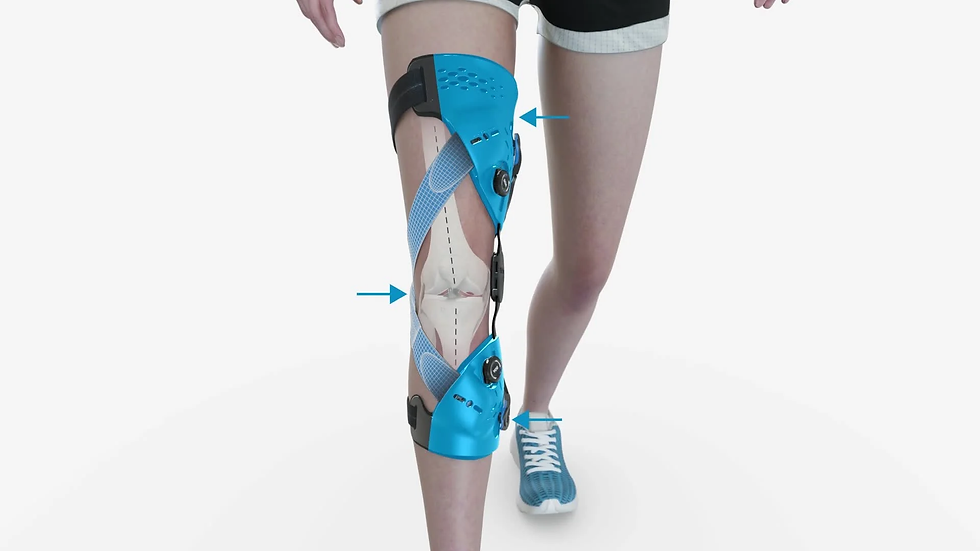
Knee orthoses (braces) are a low-risk, cost-effective way to manage OA pain, whether you need support short-term while deciding on treatment, or long-term as an alternative to surgery. Depending on your needs, your orthotist may recommend different type of braces. For example an Unloader brace which shifts load away from the damaged compartment of the knee.
For unicompartmental knee OA (where damage is concentrated on one side), unloader braces are typically the most effective option, because they're specifically designed to correct the misalignment driving the wear.

How Does an Unloader Brace Actually Work?
An unloader brace uses a three-point leverage system across the knee joint. In simple terms, it gently pushes the knee into a slightly corrected alignment, which reduces the pressure on that damaged compartment and shifts more of your body weight onto the healthier side of the joint.
The result isn't just pain relief. By restoring more natural alignment and movement, an unloader brace can also:
Reduce pain during walking, standing, and daily activities
Improve stability, especially on uneven ground or stairs
Support mobility, helping you stay active rather than avoiding movement
Help prevent further deformity by correcting how load passes through the joint

Does It Actually Work? What the Evidence Shows
This isn't just theory. A review of clinical studies over the past decade found that almost all published research supports unloader brace use, showing improvements in pain, function, and quality of life for people with unicompartmental knee OA. One long-term study even found bracing to be more cost-effective than total knee replacement, in some cases delaying or removing the need for surgery altogether.
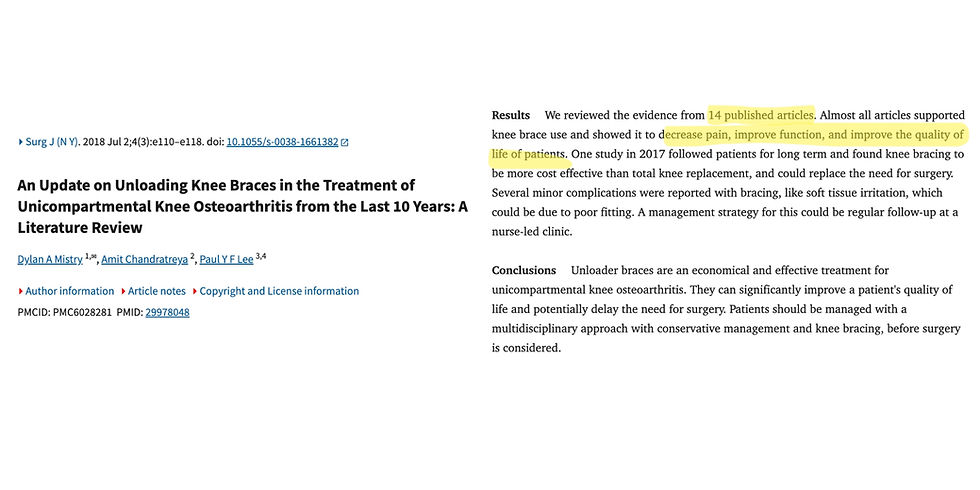
Bracing is also incorporated into major clinical guidelines, including NICE's osteoarthritis recommendations and OARSI's biomechanical intervention guidance,.
That said, bracing isn't a one-size-fits-all fix. A poorly fitted brace can cause skin irritation or simply feel uncomfortable enough that people stop wearing it, which is exactly why proper assessment and fitting matter.
Who Is a Good Candidate?
An unloader brace tends to work best for people with:
Mild to moderate knee osteoarthritis affecting mainly one side of the joint
A visible bowed-leg or knock-kneed alignment
A wish to stay active at work, with family, or in sport, without rushing into surgery
Concerns about surgical waiting times, recovery, or being "too young" for a knee replacement
How OrthoKai Can Help
At OrthoKai, we understand that knee pain doesn't just affect your joint, it affects how you move through your day, whether that's standing at the "pasar malam", playing with your grandchildren, or getting through a full shift at work. Our team assesses your alignment, gait, and lifestyle before recommending or custom-fitting a brace, so you get a device that actually fits how you live, not just how you stand still while testing.
We offer a full range of knee bracing solutions, from off-the-shelf support to fully custom unloader braces, across our centres in Singapore, Kuala Lumpur and Johor Bahru. If surgery feels premature or you'd simply like to explore what's possible before going down that road, we're here to talk it through with you.
Frequently Asked Questions
Is an unloader brace only for older people?
No. While knee OA is more common with age, younger people with joint injuries, sports-related wear, or early-onset arthritis can also benefit, especially if they want to stay active without rushing into surgery.
Will I need to wear the brace forever?
Not necessarily. Some people use a brace short-term while managing a flare-up or deciding on next steps, while others wear one long-term as their main way of managing symptoms. Your orthotist will tailor this to your situation.
Can a brace really delay knee replacement surgery?
For many people with mild to moderate unicompartmental OA, yes — clinical evidence shows bracing can meaningfully reduce pain and improve function, which for some patients delays or removes the need for surgery. It's not guaranteed for everyone, which is why a proper assessment matters.


