
Baby Bonus CDA Funds Accepted
for Baby Helmet Therapy at OrthoKai

Baby Helmet Therapy for Flat Head Syndrome
Custom Gentle Cranial Remoulding Orthosis for Plagiocephaly & Brachycephaly
Our Flat Head Solutions
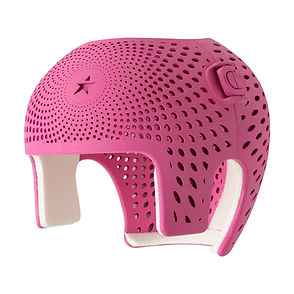
Custom Baby Helmet at OrthoKai
OrthoKai provides baby helmet therapy, also known as custom cranial remoulding orthoses, for babies with flat head syndrome, plagiocephaly, brachycephaly, and other head shape concerns.
We support parents through a full baby head shape assessment, helping identify whether helmet therapy may be suitable for their baby. If recommended, our team guides families through measurement, fitting, follow-up reviews, helmet adjustments, and daily care advice.
Baby helmet therapy may help when a baby’s flat spot or uneven head shape does not improve with repositioning, tummy time, or physiotherapy. For head shapes such as scaphocephaly, further medical assessment may be needed before deciding on the right treatment pathway.
Trusted Internationally Across 6 Locations
OrthoKai is a trusted prosthetics and orthotics centre built on years of hands-on clinical experience, personalised care, and a commitment to helping each patient move with greater comfort and confidence. Located in Mount Elizabeth Hospital, Singapore General Hospital, Henderson, Johor Bahru, Kuala Lumpur and Penang. We provide expert solutions to enhance movement and comfort. Book your OrthoKai appointment today to experience our professional care and advanced solutions.
Mount Elizabeth Hospital
Singapore General Hospital
Henderson
Johor Bahru
Kuala Lumpur
Penang
What Our Patients Say
What is Flat Head Syndrome
Plagiocephaly
Plagiocephaly is when one side of a baby’s head becomes flattened, causing an uneven or asymmetrical head shape. Parents may notice one ear appears more forward, one side of the forehead looks more prominent, or the back of the head looks uneven.

Brachycephaly
Brachycephaly happens when the back of the baby’s head becomes flattened across a wider area, making the head appear shorter and wider from above.

Scaphocephaly
Scaphocephaly is a long and narrow head shape that may be associated with sagittal craniosynostosis, a condition where one of the skull sutures closes too early. Because this may affect skull growth, babies with a long, narrow head shape should be assessed by a qualified healthcare professional to determine the cause and suitable treatment pathway.

How it works

Before helmet

After helmet
Before helmet
Before and after scan to visualise changes as your baby grows with guided support.
Gentle growth guidance
A cranial remoulding helmet does not squeeze your baby’s head. It is custom-shaped to leave space where growth is needed and provide light contact where growth needs to be guided.
Custom fit
Your baby’s head shape is assessed and measured carefully. If helmet therapy is suitable, a custom cranial orthosis is made to match your baby’s head shape.
Regular adjustments
As your baby grows, the helmet fit needs to be reviewed. Small adjustments help keep the helmet comfortable and effective throughout treatment.
Progress monitoring
Follow-up reviews allow the clinician to monitor head shape changes and guide parents on wear time, cleaning, skin checks, and what to expect.

When Baby Helmet Therapy May Be Considered
Baby helmet therapy may be considered for infants who:
-
Have noticeable head shape asymmetry
-
Have not shown sufficient improvement with repositioning
-
Are identified through clinical assessment as suitable for helmet therapy
Suitability and timing depend on individual assessment and developmental factors.

How does the treatment work?
-
A cranial molding helmet is used to help to align skull bones while the cranium is growing.
-
Helmets rely on brain growth to help reshape the cranial bones. Brain growth is greatest between birth and age 12 months: during this time, skull bones are more malleable.
What is the recommended age?
If flatness remains noticeable after 4 months despite conservative treatment, cranial remolding therapy may be recommended.
-
0-4 months - Conservative treatment (positioning, tummy time, exercise, physical therapy)
-
4-7 months - Best age to begin helmet therapy based on brain growth and skull bone malleability.
-
7-12 months - Cranial growth starting to slow, good results are still possible, may take longer.
Conservative treatment (0–4 months old)
-
Encourage tummy time
-
Alternate your baby's head position
-
Hold your baby
-
Frequently move your baby between places (crib, stroller, swing, etc)
-
Put your baby to sleep on their back at alternate ends of the crib
-
Minimize the time your baby is stationary during waking hours
-
Alternate holding positions during feeding time between right and left arm.
Our Blogs


-
Bring your baby in for a quick, gentle check with our clinician.
-
We’ll look at your baby’s head shape, movement, and any preferences like turning to one side.
-
If suitable, we may do a 3D scan to capture the head shape accurately (fast and non-invasive).
-
You’ll get clear guidance on what we’re seeing, and what options are available.


_JPG.jpg)
