
Life After a Below-Knee Amputation: Regaining Mobility with a Transtibial Prosthesis
A below-knee amputation, medically known as a transtibial amputation, is a significant life-changing event that can affect a person both physically and emotionally. It is completely understandable to feel uncertain about what comes next and what the recovery journey may involve. However, here's what we want you to know early: this is one of the most rehabilitatable levels of limb loss. This is because the knee joint is preserved, allowing most patients to go on to walk independently again, with many regaining a near-normal gait, and a good number of them returning to active lives. With the right prosthesis, proper rehabilitation, and consistent follow-up, mobility isn't just possible, it is a likely outcome.
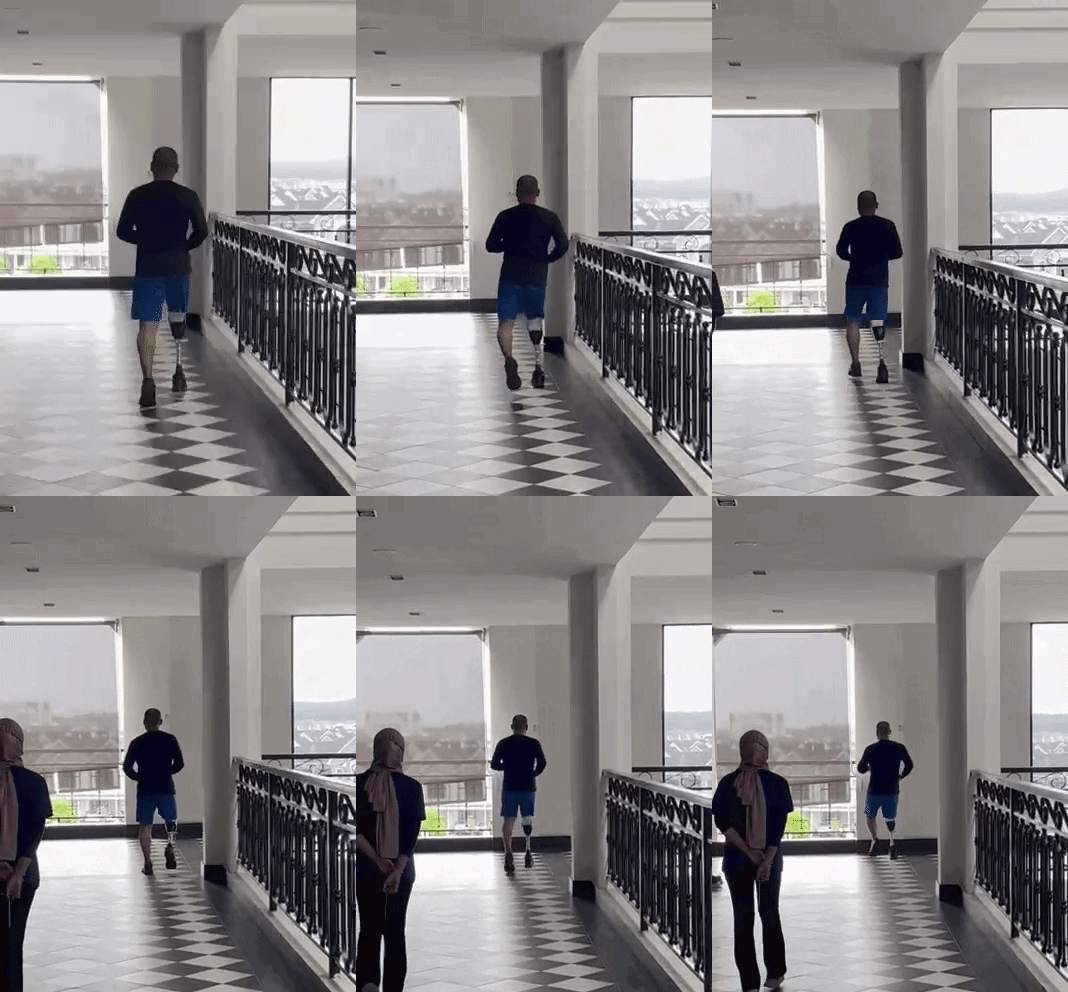
Understanding Below-Knee (Transtibial) Amputation
A transtibial amputation removes the lower leg below the knee, while keeping the knee joint itself intact. Keeping the knee intact changes the entire rehabilitation picture.
Common reasons a below-knee amputation becomes necessary include:
Peripheral artery disease (PAD), which restricts blood flow to the limb and is one of the most common causes of amputation.
Diabetes-related complications, which can affect circulation in much the same way as PAD and account for roughly half of all vascular-related amputations.
Trauma, such as workplace or road traffic accidents.
Severe infection, including sepsis or non-healing wounds.
Tumours, though these account for a much smaller share of cases.
Given how common diabetes and vascular disease are across Malaysia and Singapore, many of the patients we see arrive at this point because of a gradually developing health condition rather than a sudden injury — which is exactly why early, structured care matters so much.
Preserving the knee joint offers rehabilitation advantages: knee control stays physiological, muscle function around the joint is largely intact, and walking generally demands noticeably less energy than it would if it was an above-knee amputation. The usual recovery pathway follows a clear sequence: wound healing and residual limb (stump) care, swelling (oedema) control and limb shaping, physiotherapy for strength and balance, prosthetics fitting, and finally gait training.
What Is a Transtibial Prosthesis?
A transtibial prosthesis is a custom-built device that replaces the missing lower leg. It isn't a single product but a system of parts working together, each one shaped around your body.
Socket — the part that fits directly onto your residual limb. This is, without question, the most important component. It must be snug enough to transfer your weight securely, yet gentle enough not to compromise circulation or comfort. Sockets are custom-moulded to your limb, and the fit largely determines your long-term comfort and outcomes.
Suspension system — keeps the prosthesis securely attached, using methods such as suction, vacuum, pin-lock, sleeves, or a hybrid of these.
Pylon — the structural connector between the socket and the foot.
Prosthetic foot — absorbs shock and helps propel you forward, ranging from simple designs to high-performance, energy-returning feet for more active users.
In practice, socket fit matters more than any other high-end foot or ankle component. A poorly fitted socket undermines even the best technology available — which is why the skill of the team fitting it matters just as much as the device itself.
Why Below-Knee Rehabilitation Tends to Go Well
Clinically, transtibial amputees consistently do well compared to those with a higher-level amputation, largely because the knee remains under the body's control. This tends to mean a more natural gait with less compensatory movement, a meaningfully lower energy cost of walking, faster progress toward independent walking, and better stability — particularly when standing, climbing stairs, or moving over uneven ground.
This is also why timing matters. Getting fitted for a prosthesis promptly, and following a structured rehabilitation plan from the start, has a direct and significant bearing on long-term mobility. Delays in rehabilitation may make the journey back to mobility more challenging and prolonged.
Rehabilitation: The Real Work Starts Here
Receiving a prosthesis is not reaching the finish line, but rather the starting point of the rehabilitation journey. From here, rehabilitation typically focuses on building strength in key muscle groups such as the quadriceps, hamstrings, and hip stabilisers, along with improving balance, proprioception, weight transfer, gait, and endurance.
A well-run rehabilitation programme also protects the rest of your body — reducing the load placed on your unaffected leg and lowering the risk of back pain or joint strain down the line. Patients who skip structured rehabilitation often develop compensatory walking patterns that become difficult to correct later, so this stage is worth taking seriously even if progress feels slow.
Returning to Daily Life
With a properly fitted transtibial prosthesis, most patients return to independent walking, driving, work, travel, and light to moderate sport. Higher-function users often progress further still, into hiking, running with specialised prostheses, or regular gym training.
What limits progress is rarely the prosthesis on its own. More often, it comes down to three things: the quality of the fit, the quality of the rehabilitation, and the patient's own confidence.
The Emotional Side Matters More Than Expected
The physical recovery is visible. However, the emotional side often isn't. It's common to experience a shifting relationship with your own body in the months after amputation, alongside fear of falling, frustration with the pace of progress, or self-consciousness in social situations. Many people describe this adjustment as moving through phases similar to grief — denial, anger, and eventually acceptance — though these rarely happen linearly, and it's normal for them to overlap or resurface.
What tends to help: clear expectations set early by your clinical team, gradual and measurable progress you can actually see, connecting with other prosthetics users, and a support system you can lean on. For many, a prosthesis that starts to feel like a genuine part of the body — rather than an external tool — marks a real turning point in this process. Confidence usually follows mobility, not the other way around, so be patient with yourself while both are still building.
Choosing the Right Prosthetics Provider
This is one of the most consequential decisions in the whole journey. A good outcome depends on clinical assessment, socket design expertise, ongoing follow-up adjustments, integration with rehabilitation, and a plan for how your prosthesis will evolve as your needs change.
A prosthesis is not a one-time purchase. It's an ongoing relationship between you and your care team.
How OrthoKai Can Help
At OrthoKai, we focus on personalised prosthetics solutions paired with structured, hands-on training, so each patient gets the best possible functional outcome — not just a device that fits, but a plan that works for their life. Our below-knee prosthesis service covers everything from initial socket design through to long-term follow-up and adjustment, across our centres in Mount Elizabeth Hospital, Singapore General Hospital, Henderson, Johor Bahru, Kuala Lumpur and Penang.
We know that socket fit plays a critical role. That's why our team invests real time in getting that right, and stays involved well beyond the day your prosthesis is fitted.
Frequently Asked Questions
How soon after a below-knee amputation can I be fitted for a prosthesis?
This depends on wound healing and swelling control, but many patients begin the fitting process once the residual limb has stabilised and the surgical site has healed. Your clinical team will guide the exact timing based on your recovery.
Will I be able to walk normally again after a transtibial amputation?
Many patients regain a near-normal gait, particularly with a well-fitted socket, consistent rehabilitation, and gait training. Outcomes vary by individual, but this level of amputation offers a genuinely strong starting point for recovery.
What matters most for a good long-term outcome?
Socket fit, rehabilitation quality, and follow-up care matter more than any single high-end component. A prosthesis is an ongoing process, not a one-time fitting.
If you'd like to explore your options, our team is happy to guide you through what recovery could look like for you.
You can also read Irene's story — a patient who found her way back to mobility and confidence after limb loss.


