Above Knee Prosthesis
Custom above-knee prosthetic care designed to support stability, comfort, knee control, and everyday mobility.
What is a above-knee prosthesis?
What is an above-knee prosthesis?
An above-knee prosthesis, also known as a transfemoral prosthesis, is an artificial limb designed for individuals with limb loss above the knee. It replaces the missing thigh, knee, lower leg, and foot components to help support standing, walking, balance, and daily mobility.
Because the natural knee joint is no longer present, the prosthetic knee plays an important role in stability, control, and movement. The prosthesis must be carefully fitted and aligned to support the user’s safety, comfort, and walking pattern.

Who may need an above-knee prosthesis?
Above-knee prosthetic care may be suitable for individuals who:
-
Have limb loss above the knee
-
Have a congenital limb difference affecting the thigh or knee region
-
Need support for standing, walking, transfers, or daily mobility
-
Are preparing for their first prosthesis
-
Need a replacement socket, knee joint, foot, or other component
-
Experience discomfort, instability, or poor fit with an existing prosthesis
-
Want to improve walking confidence, balance, or cosmetic appearance
Suitability depends on individual assessment, physical condition, and functional needs.

Common goals of above-knee prosthetic care
An above-knee prosthesis may help support:
-
Standing balance
-
Walking stability
-
Safer knee control
-
Transfers between sitting and standing
-
Daily mobility at home, work, or school
-
Comfort during prosthetic use
-
Better posture and alignment
-
Improved confidence during movement
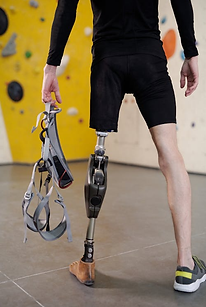
Why the prosthetic knee matters
Why prosthetic knee control is important
For above-knee users, the prosthetic knee is one of the most important parts of the prosthesis. It affects standing stability, walking safety, sitting movement, and confidence during daily activities.
Different users may require different knee designs depending on their strength, balance, walking ability, activity level, and safety needs. Some prosthetic knees are designed to remain locked during walking and unlock for sitting, while others allow more movement and control. A proper assessment helps determine which option is suitable.

How we support your care
We start with a personalised assessment to understand your needs, goals, and lifestyle.